

Why Your Business Still Needs a Pager?
In a world dominated by smartphones, it’s easy to assume pagers are outdated. Yet in 2026, hey remain vital for businesses requiring instant, reliable communication, particularly where mobile coverage is limited or inconsistent.
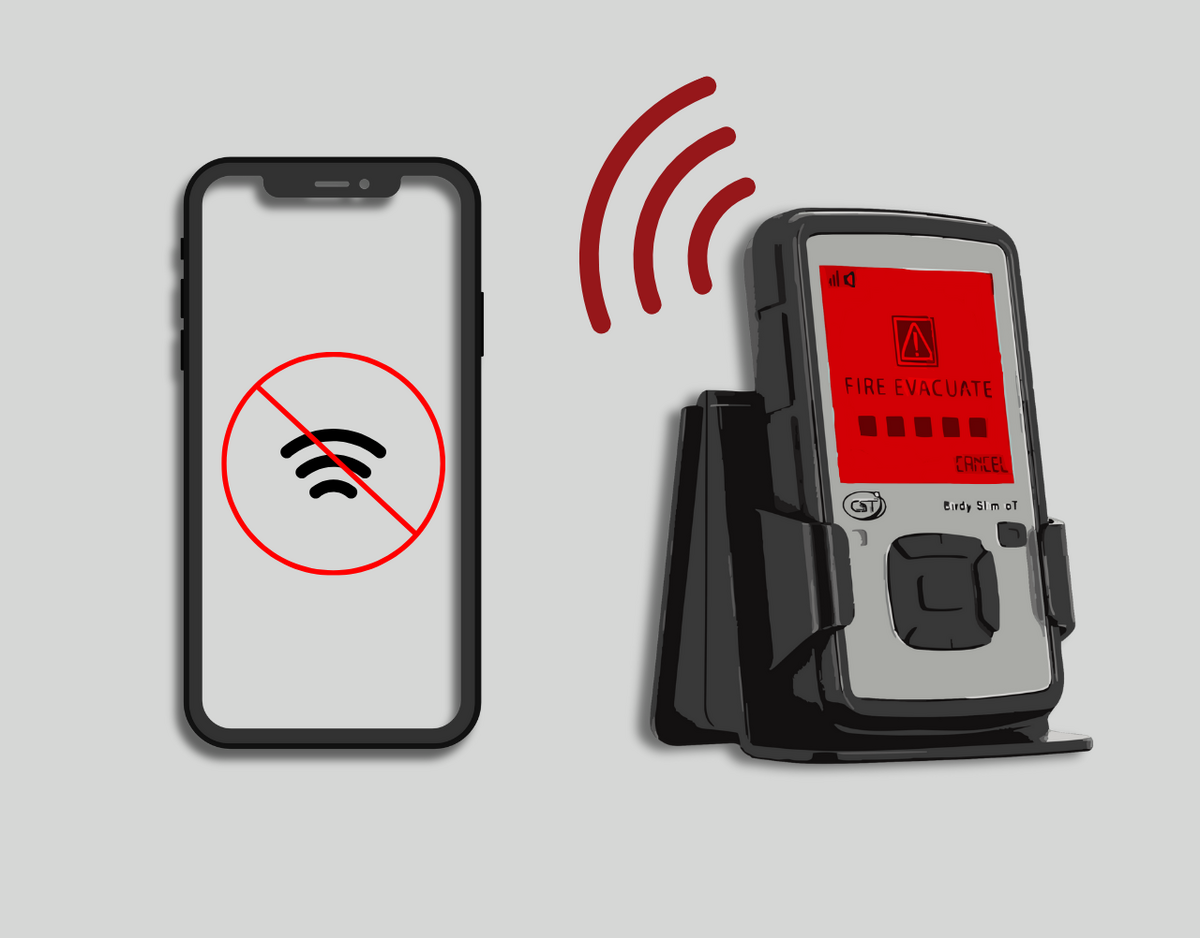
For organisations where communication failure isn’t an option, paging systems serve as the primary communication channel, operating independently of public telecommunications infrastructure, while mobile and Wi-Fi networks provide secondary support. Critical messages can still be delivered even when other systems fail.
Not sure what pager is right for you?
Why Use a Pager Instead of a Mobile Phone?
Staff communication is crucial for operational efficiency, safety, and customer satisfaction. Smartphones are powerful, but they depend on public networks and internet connectivity, which can be unreliable during peak demand or outages. Paging systems provide a purpose-built alerting system designed specifically for urgent communication.
Here’s why pagers still outperform mobiles in key environments:
- Reliable connectivity - Uses dedicated radio networks, avoiding congestion, blackspots, and internet outages.
- Faster response times - Instant delivery, not lost in apps, emails, or notifications.
- Mass alert capability - One message can reach hundreds or thousands of devices at once.
- Cost-effective - No contracts, data plans, or complex infrastructure needed.
- Long battery life - Can last days or weeks on a single charge.
- Durable design - More robust than typical consumer smartphones.
- Secure communication - Often uses encrypted transmissions and operates outside public networks, reducing cyberattack and unauthorised access risks.
What Are Pagers?
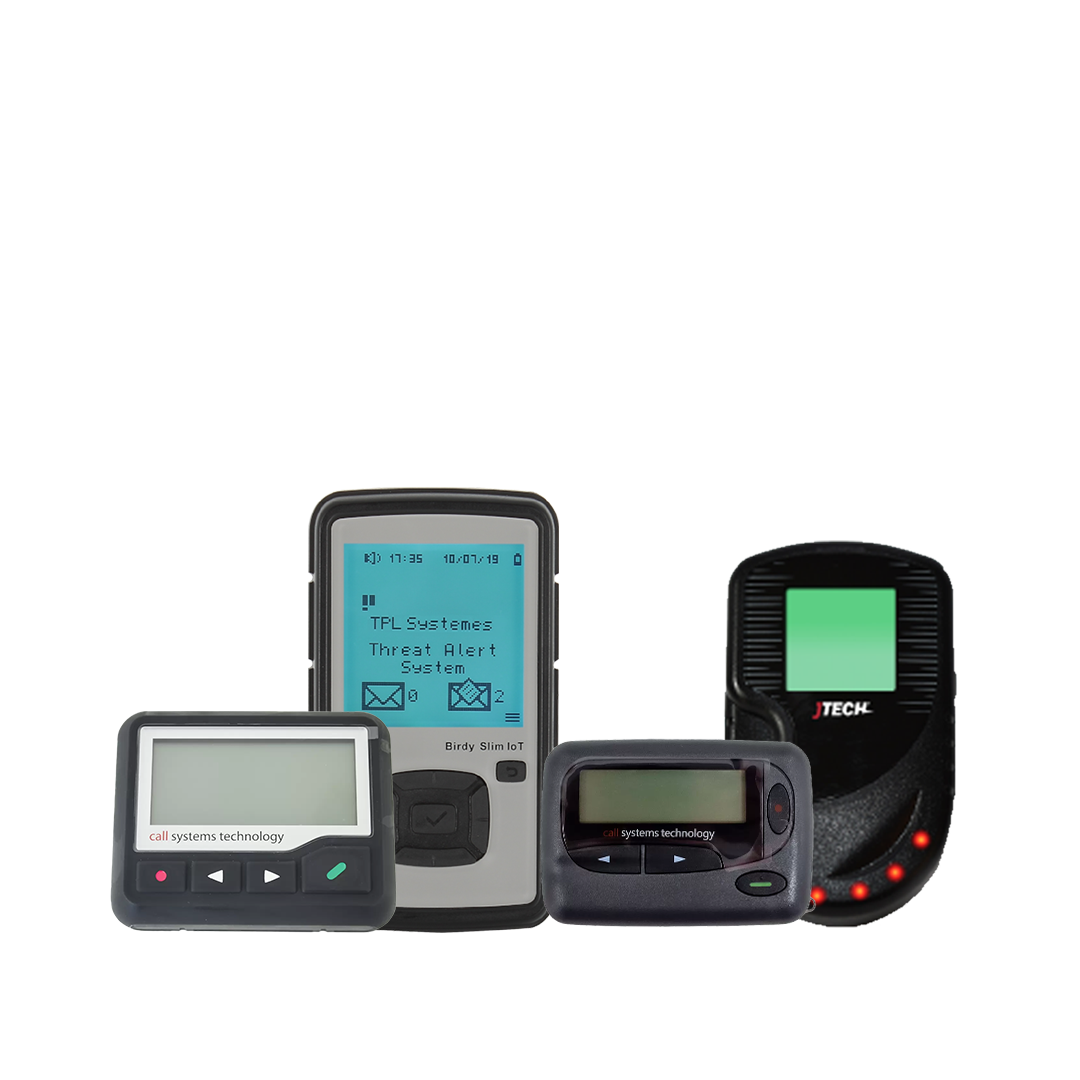
Pagers are compact, portable communication devices designed to receive instant messages. Unlike mobile phones, which depend on public cellular networks and internet connectivity, many paging systems operate using UHF (ultra-high frequency) radio signals transmitted over dedicated infrastructure.
Paging radio signals offer several advantages over conventional mobile communications:
- Travel further than mobile signals
- Require fewer transmitters
- Are less affected by thick walls, basements or remote locations
- Continue operating even if mobile networks become congested
Because paging networks use reserved radio frequencies specifically designed for alert delivery, they remain highly resilient compared with conventional communication systems.
This makes pagers a dependable choice for businesses operating in complex buildings, large sites or rural locations.
What Do Pagers Do?
Pagers provide instant, one-way or two-way communication between staff and management. When a message is sent, the device alerts the user through:
- Audible tone
- Vibration
- Flashing light
Modern pagers include a display screen so messages can be read immediately and acted upon without delay.
Pagers are effective for:

Emergency alerts
Notifying staff immediately in the event of a fire, security issue, or other critical situation.

On-call staff notification
Ensuring the right personnel respond quickly when needed.

Operational communication
Streamlining day-to-day tasks in hospitals, hotels, warehouses, or manufacturing sites.

Remote or hard-to-reach locations
Maintaining communication where mobile phone coverage may be unreliable.
Paging Is Not Obsolete: It’s Essential for Critical Messaging
While everyday communication has shifted to apps and messaging platforms, sectors that cannot tolerate failure continue to rely on paging.
These include:
- Healthcare
- Fire and rescue services
- Police and security organisations
- Utilities and energy providers
- Transportation and public safety agencies
These industries depend on paging precisely because messages must be delivered immediately and reliably without reliance on public networks.


Integrated Communication for Complete Protection
At CST, our staff paging systems integrate seamlessly with our wider solutions to provide comprehensive communication across fire safety, security, false alarms, and operational management.
This creates a fully connected system designed to:
- Reduce response times
- Improve safety
- Protect staff and customers
- Minimise operational disruption
When every second counts, dependable communication is not optional, it’s essential.

Integrated Communication for Complete Protection
At CST, our staff paging systems integrate seamlessly with our wider solutions to provide comprehensive communication across fire safety, security, false alarms, and operational management.
This creates a fully connected system designed to:
- Reduce response times
- Improve safety
- Protect staff and customers
- Minimise operational disruption
When every second counts, dependable communication is not optional, it’s essential.
Paging in 2026: A Strategic Communication Platform
In 2026, pagers are not outdated technology, they are purpose-built tools for critical communication. For organisations that prioritise safety, resilience and operational continuity, paging provides a dedicated network designed to ensure urgent messages reach the right people without delay. Unlike conventional networks, which can become congested, fail or be compromised, paging ensures instant, reliable alerts exactly when they matter. Smart businesses don’t just communicate; they make certain their messages get through. Paging does exactly that.
Choosing the Right Pager for Your Business
Not all paging systems are the same. The right solution depends on your environment, risk level and operational requirements.
To help you decide, download our white paper: